Why Choose a Ductless Heat Pump for Your Home Heating Needs?

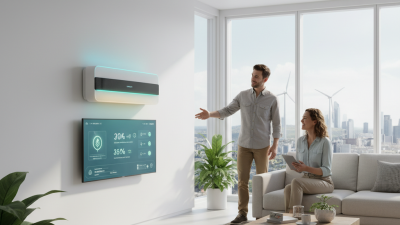
As home heating needs evolve, many homeowners consider innovative solutions. One such option is the ductless heat pump. Industry expert Dr. Jenna Carter states, “Ductless heat pumps provide efficient heating and cooling with minimal installation impact.” This highlights the practical advantages they offer.

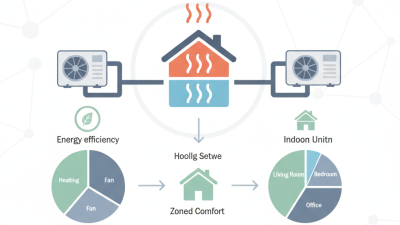
Ductless heat pumps operate without traditional ductwork. This means homes can maintain comfort while minimizing energy waste. They are also versatile, suitable for various spaces, including small apartments and expansive homes. However, the initial installation cost can be a concern for some homeowners.

It’s crucial to evaluate both benefits and drawbacks. A ductless heat pump might not be the best solution for every situation. Before deciding, consider your specific needs and the space available. Reflecting on these aspects can lead to better choices for home heating.

Why Choose a Ductless Heat Pump for Your Home Heating Needs?

Benefits of Ductless Heat Pumps for Home Heating
Why Choose a Ductless Heat Pump for Your Home Heating Needs?

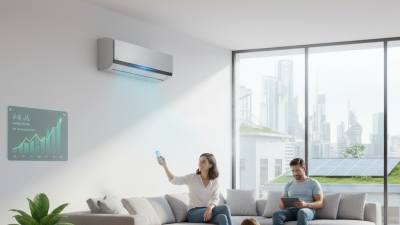
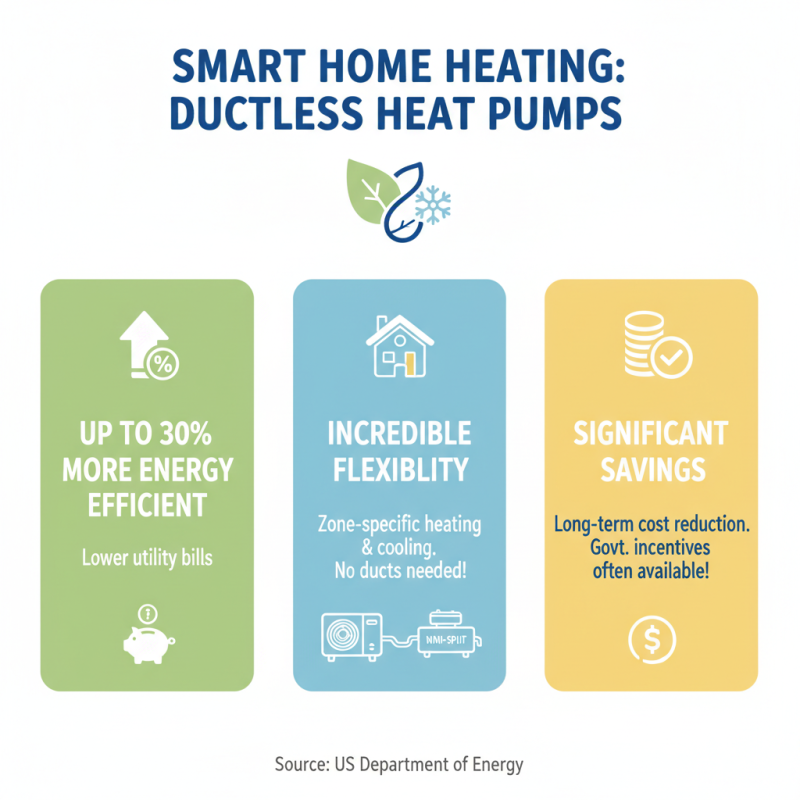
Ductless heat pumps are becoming popular for home heating. They offer flexibility and efficiency that traditional systems struggle to match. According to the U.S. Department of Energy, these systems can improve energy efficiency by up to 30% compared to conventional heating methods. This translates to lower energy bills for homeowners, often resulting in significant savings over time.

Installation is another key advantage. Ductless systems are easier to install. They don’t require extensive ductwork, which reduces labor costs. Furthermore, they can be installed in various configurations, making them suitable for both new and existing homes. However, some homeowners may worry about the upfront costs. The initial investment can be higher than that of traditional systems. Yet, many find that lower operating costs balance this out.

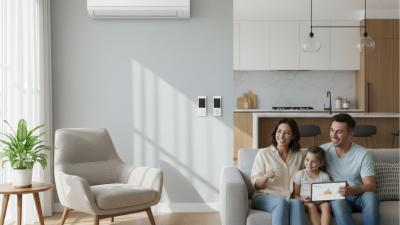
Additionally, ductless heat pumps provide personalized comfort. Each indoor unit can be controlled independently, allowing customization per room. While this offers great flexibility, it also raises a question of managing multiple controls. Some may find it overwhelming. Yet, the benefits, such as improved air quality and reduced noise, make them a strong candidate for modern heating solutions.
Energy Efficiency and Cost Savings with Ductless Systems

When considering home heating, ductless heat pumps stand out for their energy efficiency. According to the U.S. Department of Energy, these systems can reduce energy costs by up to 30%. This significant savings appeals to many homeowners looking to cut utility bills. Ductless systems use inverter technology, which adjusts the speed of the compressor. This allows for precise temperature control and less energy waste.

Heat pumps are versatile. They can provide both heating and cooling. This dual functionality means one system serves multiple needs. A study by the Northwest Energy Efficiency Alliance found that homes with ductless systems experienced a 30% increase in overall comfort. Yet, there are initial installation costs to consider. Some homeowners might hesitate due to the upfront investment. However, the return on investment can be noteworthy over time.

Usage patterns can vary greatly. Some people might find they need to adjust settings frequently. This may lead to minor inconveniences, especially during extreme temperatures. Choosing the right size unit is crucial. An oversized unit may cycle on and off too frequently, causing energy inefficiency. Balancing comfort with cost is a continuous process that requires thoughtful decision-making.

Comparison of Ductless Heat Pumps vs. Traditional Heating Methods

Why Choose a Ductless Heat Pump for Your Home Heating Needs?

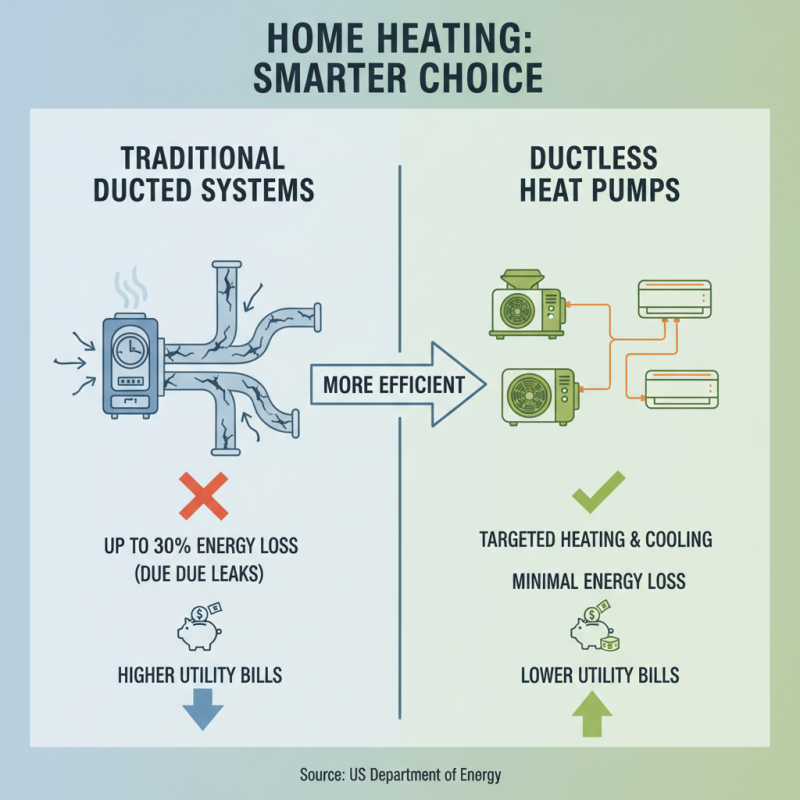
When considering home heating options, ductless heat pumps present a compelling alternative to traditional methods. Traditional systems often rely on ductwork, which can leak air and lose efficiency. According to the Department of Energy, homes with ducted systems can lose up to 30% of energy due to duct leakage. This inefficiency can lead to higher utility bills, especially in colder months. In contrast, ductless heat pumps provide targeted heating and cooling. They use individual air handlers in each room, minimizing energy loss.

Ductless systems are also versatile. They can provide heating in winter and cooling in summer. Studies show that ductless heat pumps are about 50% more energy efficient than older traditional heating methods. However, installation costs may be a concern for some homeowners. While the upfront investment can be higher, long-term savings on energy bills often balance out these costs. Each home is unique, and evaluating return on investment is crucial. Some may find that ductless systems, while beneficial, don't fit every situation or budget perfectly. It's essential to weigh these factors before making a decision.

Installation Considerations for Ductless Heat Pumps

When considering a ductless heat pump for your home, installation is a critical factor. Ductless systems are often easier to install than traditional heating systems. They do not require extensive ductwork, which can save time and money. According to the U.S. Department of Energy, ductless systems can offer efficiency ratings of up to 30% higher than conventional systems. This is a significant advantage, especially in areas with colder climates.

However, installation must be approached carefully. It’s essential to assess the layout of your home. The location of indoor units impacts airflow and heating efficiency. Each unit should be strategically placed in commonly used spaces. Not all homes will benefit equally from ductless systems. A professional evaluation is recommended to determine the best setup.

Tip: Ensure the outdoor unit is placed on a solid, level foundation. This can prevent future issues like noise or vibration.

In addition, consider the potential for zoning. Ductless systems allow for heating different rooms independently. Yet, this may lead to uneven heating if not installed correctly. Some rooms might feel warmer than others. It's necessary to balance the airflow and check for drafts.

Tip: Regular maintenance is key. Clean the filters and check for blockages to maintain efficiency. Proper care can extend the life of your system.

Maintenance Tips for Longevity of Ductless Heat Pumps

When considering a ductless heat pump, maintenance is key for its longevity. Regular upkeep ensures efficiency and comfort in your home. Studies show that units well-maintained can last over 20 years, while poorly maintained systems may fail much sooner.

Tip: Clean or replace filters monthly. Clogged filters can reduce airflow and strain the system. It’s also wise to check for leaks around connections. A one-inch leak can waste up to 30% of heated air! This simple task can lead to significant savings on energy bills.

Another important aspect is scheduling professional maintenance at least once a year. Technicians can inspect refrigerant levels and clear debris from the outdoor unit. Many homeowners neglect this step, leading to a decline in performance. A well-serviced heat pump runs effectively, contributing to lower energy usage. Remember, good maintenance habits make a difference in overall efficiency.

Why Choose a Ductless Heat Pump for Your Home Heating Needs? - Maintenance Tips for Longevity of Ductless Heat Pumps

Feature Description Maintenance Tips
Energy Efficiency Ductless heat pumps reduce energy costs and improve heating efficiency. Regularly clean or replace filters every 1-3 months.
Zoning Capability Allows for heating different areas of the home independently. Schedule seasonal check-ups for optimal performance.
Installation Flexibility Easier to install in homes without ductwork. Inspect the outdoor unit for debris and clear obstructions.
Indoor Air Quality Filters allergens and maintains better indoor air quality. Consider UV light installation to reduce mold growth.
Quiet Operation Operates more quietly compared to traditional heating systems. Check for loose parts and tighten as necessary.