Choosing an Electric Pickup Truck in 2026 requires more than comparing battery sizes and glossy range figures. The International Energy Agency’s Global EV Outlook 2025 reported that global electric car sales exceeded 17 million in 2024, showing how quickly charging, batteries, and vehicle software are developing. Pickup buyers, however, face a harder question: can the truck handle real work?
Start with your weekly routine. A 300-mile rated range may shrink when towing a trailer, carrying wet landscaping materials, or driving through freezing weather. Check usable payload, maximum towing capacity, hitch ratings, and charging speed. The U.S. Department of Energy’s Alternative Fuels Data Center provides reliable information about charger locations and connector availability. Still, route-planning apps can miss broken stalls or temporary limits.
Look closely at independent testing. J.D. Power’s 2025 U.S. Electric Vehicle Experience Public Charging Study highlights charging reliability as a major ownership concern. That finding deserves attention. A powerful truck is less useful when a public charger adds an unexpected hour to a workday.
Consider home charging, too. A 240-volt installation, electrical-panel capacity, and overnight parking can change ownership costs dramatically. Energy prices, insurance, tires, and battery warranties also matter more than a showroom payment.
Numbers help. They do not tell the whole story.
This guide compares range, towing, payload, charging, durability, software, and total cost. It also recognizes uncertainty, because early impressions and manufacturer claims are not always equal to long-term experience. The best Electric Pickup Truck is not necessarily the fastest or largest. It is the model that fits your actual loads, routes, climate, budget, and tolerance for charging compromises.
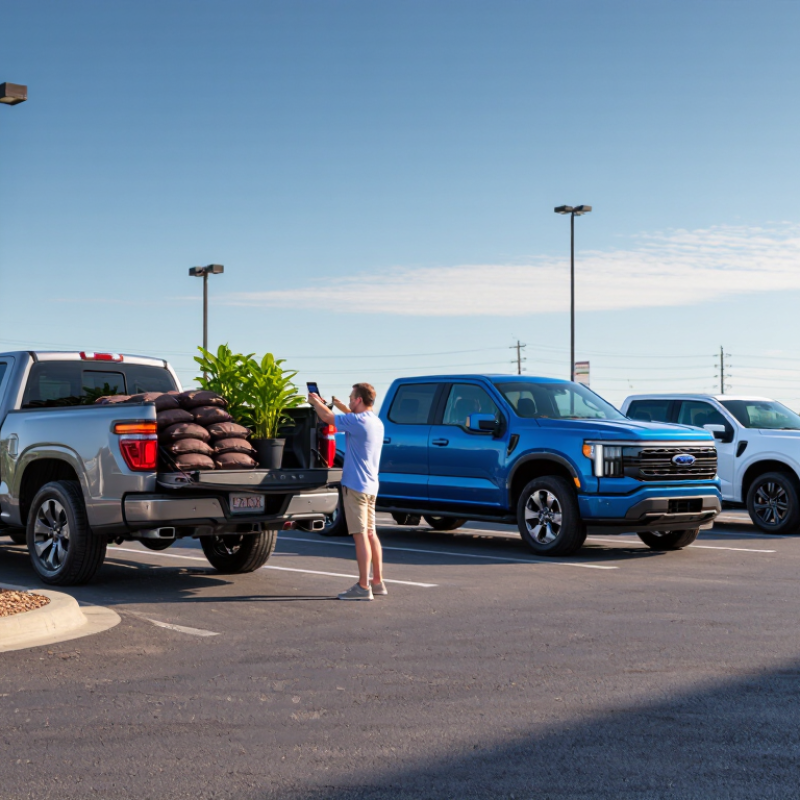
Choosing an electric pickup truck in 2026 starts with understanding its basic systems. A battery pack stores energy beneath the cabin or bed. An electric motor delivers instant torque to the wheels. Most trucks use single-motor or dual-motor layouts, while some offer stronger four-wheel drive.
Range is only one part of the decision. Payload, towing capacity, charging speed, and ground clearance often matter more for daily work. A heavy trailer can reduce driving range sharply, especially in cold weather. A home charger may refill the truck overnight, but public charging can still require planning. It can be inconvenient.
The 2026 market is likely to separate into three useful categories. Compact electric pickups suit urban drivers, small businesses, and light weekend loads. Midsize models offer a practical balance between parking ease, cabin space, and towing ability. Full-size trucks target construction users, rural owners, and frequent long-distance hauling. A fourth group may focus on off-road travel, with higher clearance, protective panels, and larger battery reserves.
Check the usable bed length, not only the advertised figure. Measure your trailer, tools, and charging location before comparing specifications. Independent road tests can reveal winter range, braking stability, and real payload performance. Manufacturer figures are important, but they are not always comparable. I would also inspect repair access and battery warranty terms. A polished display cannot replace dependable service.
How to Choose an Electric Pickup Truck in 2026?
Match the truck to your real cargo, not an imagined weekend. Check the door-jamb label for GVWR, curb weight, and available payload. Payload equals GVWR minus curb weight. It includes passengers, tools, luggage, and trailer tongue weight. A 1,500-pound payload can shrink quickly with four adults and wet equipment. The U.S. Department of Energy’s Alternative Fuels Data Center warns that added weight and aerodynamic drag reduce electric efficiency. Measure your heaviest normal load. Guessing here is expensive.
Towing needs more careful planning. SAE J2807 ratings provide a useful testing framework, but maximum capacity is not comfortable daily capacity. AAA’s 2019 electric-vehicle range study found that towing a 1,000-pound trailer reduced range by roughly 27% to 36%. Larger trailers can create a harsher penalty. Headwinds, hills, cold weather, and highway speed make the calculation less friendly. I would reserve at least 20% range for uncertainty. That is my practical rule, not a universal standard.
Match battery size to your driving pattern. A long-bed configuration may help with lumber, but it can increase turning difficulty and energy use. For commuting, home charging may matter more than peak power. For regional hauling, inspect fast-charging locations before buying. The International Energy Agency reported more than four million public charging points worldwide at the end of 2023, yet coverage remains uneven. Trailer access can also block charging spaces. Small details matter.
Use the truck class that matches your normal workload. Compact and midsize electric pickups generally prioritize urban maneuverability and efficiency, while full-size models provide substantially higher payload and towing capacity. Actual range and capability vary with battery size, weather, cargo, trailer weight, terrain, and charging conditions.
How to Choose an Electric Pickup Truck in 2026?
Battery range should be judged under working conditions, not only laboratory ratings. A pickup carrying tools, passengers, or a trailer can lose substantial range. Payload changes everything. Cold weather also increases heating demand and reduces usable energy. I would compare the usable battery capacity, not the advertised total. For example, a 100-kWh battery delivering 2.5 miles per kWh provides about 250 miles before weather, speed, and cargo losses. The International Energy Agency’s Global EV Outlook 2024 reports that global public charging points exceeded four million in 2023, but coverage remains uneven outside major routes.
Charging compatibility matters as much as battery size. Home Level 2 charging is practical for overnight recovery, while DC fast charging suits long-distance work. The U.S. Department of Energy’s Alternative Fuels Data Center describes Level 2 charging as a multi-hour process, while DC fast charging can often replenish a useful portion within 20 to 60 minutes. Check the truck’s maximum charging rate, connector type, and battery preconditioning behavior. A powerful station cannot help if the vehicle accepts power slowly.
Efficiency deserves close attention. The U.S. Environmental Protection Agency evaluates electric vehicles in kilowatt-hours per 100 miles and uses 33.7 kWh as one gallon-equivalent. Lower consumption usually means lower operating costs and more usable range. Review independent tests, towing data, and winter results. Advertised figures can be optimistic. Sometimes, inconveniently, the efficient choice has less towing capacity.
How to Choose an Electric Pickup Truck in 2026?
Price is only the entry point. Compare the truck’s purchase price with charging, insurance, tires, service, and electricity costs. A lower-priced model may have slower charging or a smaller battery. That difference matters during long workdays. Estimate your monthly driving distance, then calculate energy use from the vehicle’s tested efficiency. Use local electricity rates, not a national average. I have found that many buyers underestimate tire replacement costs, especially when carrying heavy loads. That mistake can disturb an otherwise careful budget.
Warranty terms require close reading. Check coverage for the battery, drive motor, charging equipment, and corrosion. Look for mileage limits, time limits, and exclusions related to commercial use. Available incentives can reduce the final price, but eligibility may depend on income, location, vehicle assembly, or purchase date. Confirm details through government websites or qualified tax professionals. Incentives can change quickly. Do not treat an online estimate as guaranteed savings. I would also compare financing costs, because a generous rebate may not offset expensive borrowing.
Tips: Request a written ownership estimate from a dealer or fleet adviser. Test charging at home before ordering. Keep records of electricity use for three months. Leave room for unexpected repairs. Real ownership is rarely as tidy as a spreadsheet.
| Evaluation Area | Entry-Level Compact | Midsize Daily Driver | Full-Size General Purpose | Work-Focused Heavy-Duty | How to Evaluate |
|---|---|---|---|---|---|
| Typical 2026 U.S. Purchase Price | $35,000–$50,000 | $45,000–$65,000 | $60,000–$90,000 | $75,000–$110,000+ | Compare the negotiated price, destination charges, financing cost, taxes, registration, and dealer-installed equipment—not only the advertised starting price. |
| Usable Battery Capacity | 55–75 kWh | 70–100 kWh | 100–140 kWh | 130–220+ kWh | A larger battery can improve range and towing capability but generally increases purchase price, vehicle weight, and replacement cost. |
| EPA-Estimated Driving Range | 180–260 miles | 220–330 miles | 250–400 miles | 250–450 miles | Use the lower end of the range for winter conditions, high speeds, payload, large tires, and frequent towing. |
| Estimated Energy Consumption | 30–40 kWh/100 mi | 32–42 kWh/100 mi | 35–50 kWh/100 mi | 45–70+ kWh/100 mi | Lower consumption usually produces lower charging costs, especially for drivers with high annual mileage. |
| Home Charging Time | 7–10 hours on a 240-volt Level 2 charger | 8–12 hours on a 240-volt Level 2 charger | 10–16 hours on a 240-volt Level 2 charger | 12–24+ hours on a 240-volt Level 2 charger | Confirm charger power, onboard charging rate, electrical-panel capacity, installation cost, and utility time-of-use rates. |
| Typical DC Fast-Charging Rate | 80–170 kW | 120–250 kW | 150–350 kW | 150–350+ kW | Peak charging power is not the same as average charging speed. Review the 10%–80% charging time and the charging network available on your routes. |
| Estimated Annual Energy Cost | $650–$1,100 | $750–$1,300 | $850–$1,600 | $1,100–$2,300+ | Estimate based on 12,000 miles per year and electricity at approximately $0.15–$0.30 per kWh. Public fast charging can cost substantially more. |
| Routine Maintenance | Low | Low | Low to moderate | Moderate under heavy use | Electric trucks generally avoid oil changes and many engine-related services, but still require tires, brakes, suspension checks, cabin filters, alignment, and inspections. |
| Warranty Benchmark | Basic: about 3–5 years or 36,000–60,000 miles | Basic: about 3–5 years or 36,000–60,000 miles | Basic: about 3–5 years or 36,000–60,000 miles | Basic: about 3–5 years or 36,000–60,000 miles | Read the exact terms for battery, electric drive components, corrosion, roadside assistance, commercial use, towing, and transferability. |
| High-Voltage Battery Warranty Benchmark | About 8 years or 100,000 miles | About 8 years or 100,000 miles | About 8 years or 100,000 miles | About 8 years or 100,000 miles | Check the guaranteed minimum capacity, usually stated as a percentage of original capacity, plus exclusions for abuse, alterations, and commercial operation. |
| Towing Capability | Up to about 5,000 lb | About 5,000–8,000 lb | About 7,000–12,000 lb | About 10,000–20,000+ lb | Towing can reduce real-world range by approximately 30%–60% or more. Evaluate payload, tongue weight, trailer brakes, cooling, and charging access. |
| Useful Payload Range | 1,000–1,500 lb | 1,200–1,800 lb | 1,500–2,500 lb | 2,000–4,000+ lb | Payload includes passengers, cargo, accessories, and trailer tongue weight. Always verify the door-jamb certification label. |
| Potential Federal Purchase Incentive | May be available | May be available | May be available | May be available | Eligibility can depend on purchase date, vehicle classification, MSRP, battery sourcing, final assembly, buyer income, and tax liability. Confirm current rules with the official tax authority. |
| State, Local, or Utility Incentives | Often available in selected areas | Often available in selected areas | Often available in selected areas | Often available in selected areas | Check state energy offices, local governments, electric utilities, charger rebates, low-income programs, and commercial-fleet incentives. |
| Five-Year Ownership Cost Considerations | Lowest energy and service costs; potentially higher depreciation risk | Balanced cost profile for commuting and light hauling | Higher tires, insurance, and depreciation exposure | Highest energy, tire, insurance, and commercial-use costs | Calculate depreciation, financing, insurance, electricity, maintenance, tires, home charging, taxes, registration, and expected resale value. |
Note: Figures are representative 2026 U.S. market ranges for comparison purposes, not manufacturer-specific specifications. Actual pricing, range, warranty coverage, operating costs, and incentives vary by configuration, location, driving conditions, eligibility, and regulatory changes. Verify final figures using the vehicle window sticker, warranty booklet, utility tariff, and current government incentive guidance.
Choosing an electric pickup truck in 2026 requires more than checking range or towing figures. Safety deserves a hands-on review. Look for automatic emergency braking, blind-spot monitoring, adaptive headlights, and a strong driver-alert system. Test the camera views near a trailer, especially in rain, darkness, and crowded loading areas. I would also inspect crash-test results from independent authorities, not rely on dashboard promises.
Technology should reduce workload, not create another screen-based chore. Check whether navigation plans charging stops accurately and updates traffic without distracting you. Useful details are physical: clear controls, readable displays, stable phone connections, and dependable software updates. Ask how the truck behaves when the battery is cold or nearly full. A polished demonstration may hide ordinary frustrations. Take a longer test drive.
Reliability is harder to judge in a new electric truck. Review warranty coverage for the battery, motor, charging equipment, and corrosion protection. Seek service intervals, parts availability, repair times, and verified owner reports from several seasons. For long-term use, measure home-charging cost, winter range loss, payload needs, and bed-access height. Towing can cut efficiency sharply. Leave room for it. My own checklist once missed cabin storage, which became annoying during weekly supply runs. That small mistake changed how I evaluate daily practicality.